
The Power of a Great Frame
Last month a client walked into our frame studio with a bird painting that needed help.
The painting itself was dynamic with bold color, confident brushwork, and a terrific expression. Clearly the work of a skilled painter who knew the subject well. And yet… it fell short. I don’t know how long my client lived with it in that state, but the truth is this: many strong works of art are quietly diminished by their frame and mounting.
I often hear, “I’d like to keep the original frame because the artist chose it.” My usual reply? Artists usually make lousy framers.
I can say that with affection because before Jeff and I opened Erickson & Ripper, I framed my own paintings—horribly. And here’s the hard truth: beautifully painted art, poorly framed, is difficult to sell. Period.
Some artists keep things simple and do no harm. But rarely do they elevate the work. Framing is its own discipline. It requires knowledge of proportion, finish, light interaction, mounting methods, preservation standards, and, just as importantly, how a frame affects the emotional read of a piece. Most artists simply aren’t exposed to the range of possibilities available. And then there’s cost. It’s hard to invest serious money into framing when you’re not even sure the piece will sell. So compromises are made.
And compromises show.
Back to the bird.
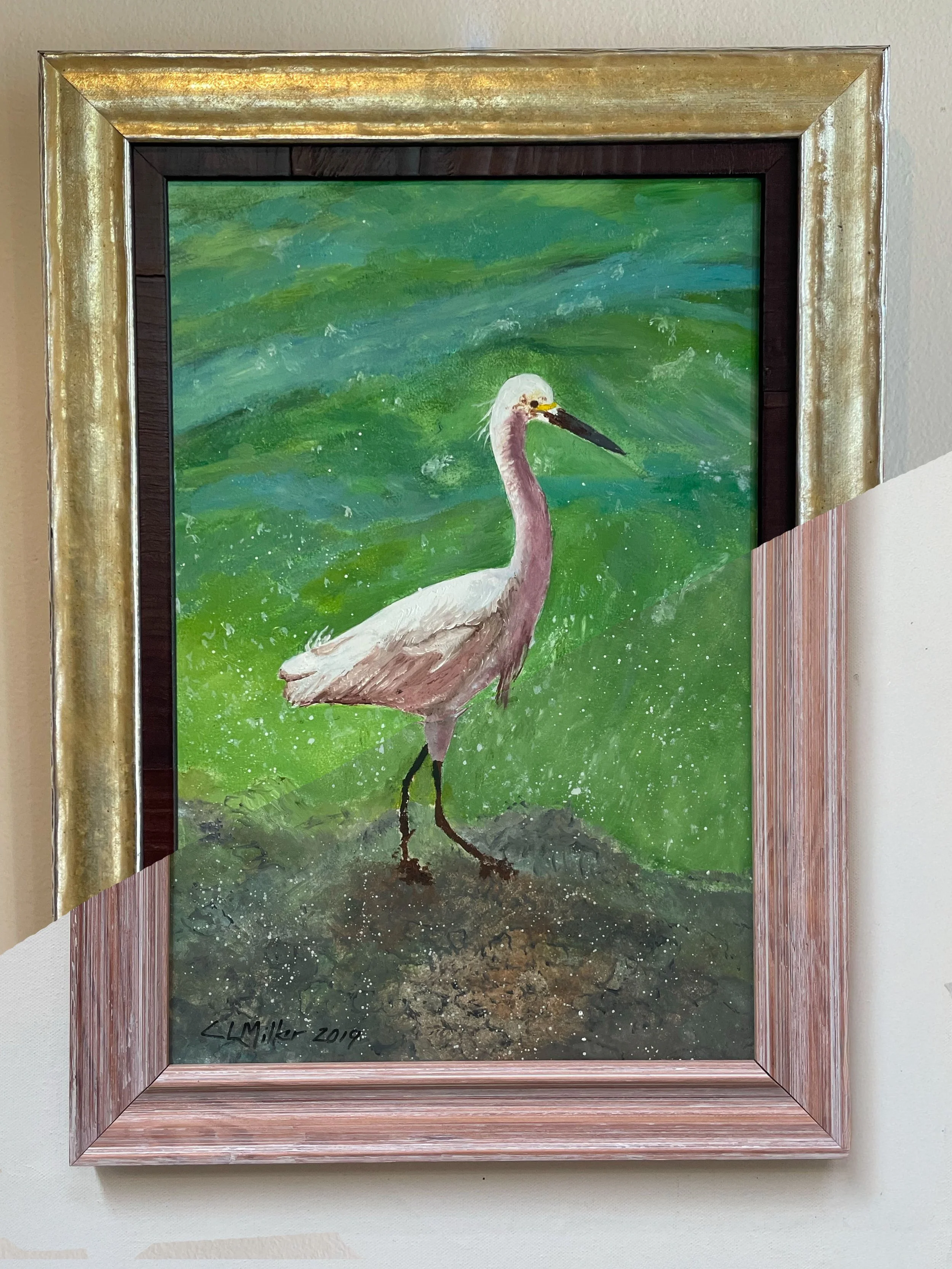
It was housed in a peach-toned frame—clearly chosen to “bring out” the peach in the bird’s feathers. I understand the instinct. On paper it sounds right. In reality, peach on peach cancels itself out. Instead of highlighting the bird, the frame flattened it. The eye had nowhere to rest. The focal point dissolved into distraction.
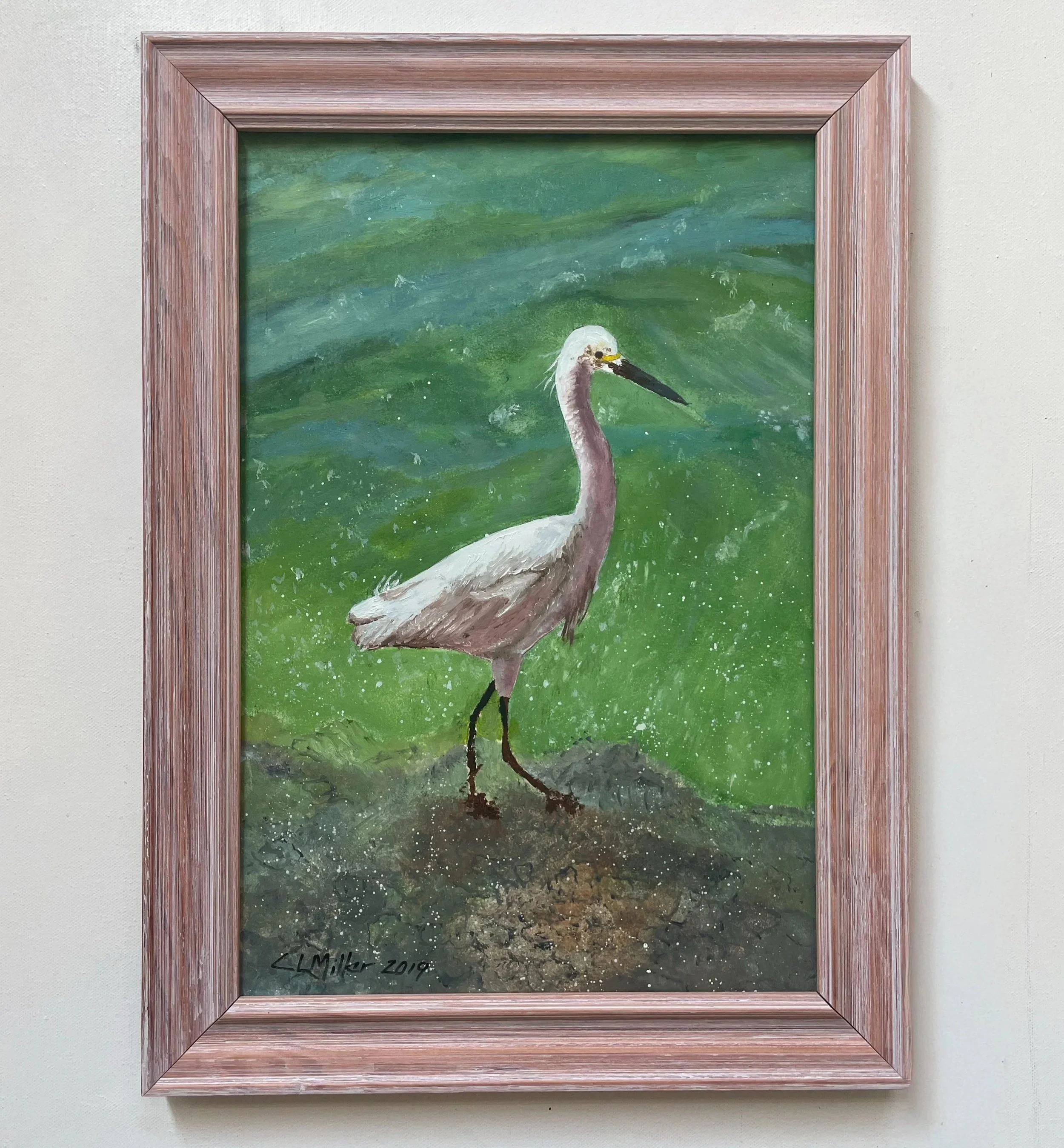
It reminded me exactly of how I might have framed something 40 years ago.
We chose instead a light moon-gold outer frame. Subtle but alive, with an irregular shimmer that echoed the movement of water in the painting. For the liner, we selected a distressed elmwood burl, pulling in the warmth of the bird’s legs and introducing a natural texture that felt like habitat rather than decoration.
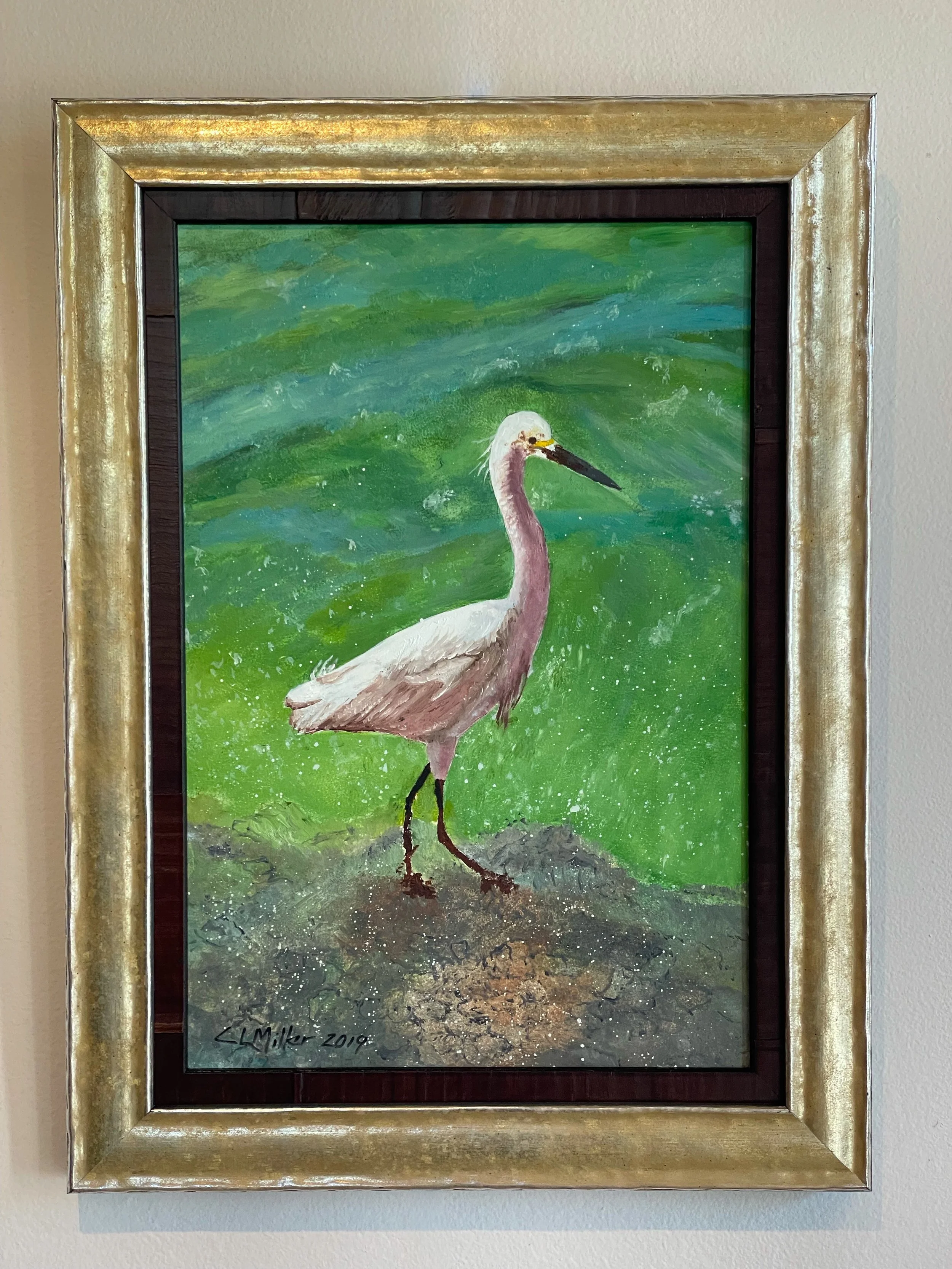
The result? Balance. Depth. Breath.
The painting didn’t change, but rather became easier to love.
A great frame doesn’t compete. It completes. It guides the eye, reinforces intention, and creates a stage worthy of the performance.
This bird is happy now. She is freed from its peach prison and able to soar to new heights!
SEE ALSO: Protest and the Arts