
Why I Can't Sit Still in My Own Living Room
My house is, by any objective measure, a good place to be. It’s super cute, the throw pillows are comfy, the blankets are fluffy and weighted. The orchids bloom often, provided I remember to water them. There is wine. There is quiet, technically. And I am incapable of simply sitting in it.
The thing is I'll get forty minutes into a book before I remember the laundry in the washer I forgot, or the orchid on the windowsill that's gone bone-dry, or a tennis ball landing squarely on the page from Charlie, or that I never confirmed a court date with a client, and I'm up. Not stressed, exactly. Just... on. A friend once described it as being unable to find the "off" switch, which is generous, because I'm not sure I've ever located the switch at all.

I assumed this was a me problem — a function of running a law firm, or of fifteen years spent being the person other people call when their lives are falling apart, or of simply being wired a certain way. But I'm a lawyer. I don't take "it's probably just me" as a satisfying answer to anything, so I went looking for the actual research. What I found was less a diagnosis and more a mirror held up to a lot of women I know.
Start with the data point that made me feel seen and slightly indicted at once. A 2025 survey of 1,000 U.S. adults by the home-comfort research group CopperSmith found that 42 percent of people need at least half an hour after walking in the door before they feel relaxed — and only 14 percent said they could relax immediately. Women fared worse than men across the board: 45 percent needed thirty minutes or more to unwind, compared with 39 percent of men.
The obstacles people named were almost comically domestic — being too busy, clutter, noise, and, in nearly a third of respondents, guilt over "doing nothing." That last one is the one that got me. Women have collectively decided that rest has to be earned, and women, it turns out, are still submitting the longer invoice.
The more interesting research explains why. In 2019, sociologist Allison Daminger published a study in the American Sociological Review that gave a name to something I've felt for years but never had language for: cognitive labor. Daminger interviewed seventy people across thirty-five couples and found that household work isn't just the doing — the laundry, the dishes — it's the anticipating, deciding, and monitoring that happens before and after the doing. Who notices the pantry is low. Who remembers the pediatrician appointment exists before it's overdue. Who's quietly tracking forty small facts about a household at any given time. Daminger found that decision-making itself was fairly evenly split between partners. It was the anticipating and the monitoring — the invisible, unpaid project management of a household — that fell disproportionately to women.
A more recent study makes the imbalance almost uncomfortably precise. Researchers from the University of Bath and the University of Melbourne, publishing in the Journal of Marriage and Family in late 2024, surveyed 3,000 U.S. parents and found that mothers carry 71 percent of the household's mental load overall, and 79 percent of the daily tasks specifically — the ones that don't pause for anything. Fathers, for what it's worth, largely didn't see it that way; they were far more likely to describe the load as evenly shared. Which tells you something too: the invisibility isn't just to the outside world. It's often invisible to the person standing right next to you.
Then there's the leisure itself — not just how much of it you get, but what it's made of. The Bureau of Labor Statistics' American Time Use Survey consistently finds men logging more leisure hours than women, with the gap widest for women in their late thirties and early forties (which, incidentally, is exactly where I live). But sociologist Lyn Craig's research adds a sharper point: even the leisure women do get is more likely to be what she calls "contaminated" — folded into childcare, interrupted, shared with a task running quietly underneath it. Mothers multitask through their downtime far more than fathers do, which means the clock says they had an hour off, but the nervous system never got the memo. Quantity of rest and quality of rest turned out to be two different variables, and women have been shorted on both. I definitely “rest” only while I wait for the dryer to buzz.
Here's the caveat I want to be honest about, because sloppy causation is a pet peeve of mine professionally and personally: none of this is really about gender. It's about role allocation, and gender is just currently the best predictor of who gets assigned the role.
Women living alone, women whose partners have genuinely renegotiated who tracks what, and the households where a man is the one doing the anticipating — none of them show this gap. I'm running an entire household by myself now, which theoretically should mean less negotiating and more control. And it does, but it also means there's no one else there daily to hand off any task to mentally. The mental load doesn't disappear when you're the only adult in the house. It just loses its plausible deniability.
I don't have a tidy fix, and I'm suspicious of anyone who claims to. But knowing the mechanism has changed what I do with it.
I've started treating my vacations the way I'd treat time in trial— actually blocked on the calendar, actually protected, not just hoped for between tasks.
I get my workout in after work to make my mind mentally put down work.
I've stopped apologizing for the thirty minutes it takes me to downshift, because apparently that's closer to average than exceptional.
And I've gotten more honest, in my own house, about naming the invisible work and really thinking about if it needs done, or if I should block the housework, instead of just quietly doing it — if only so I stop mistaking exhaustion for a personality trait.

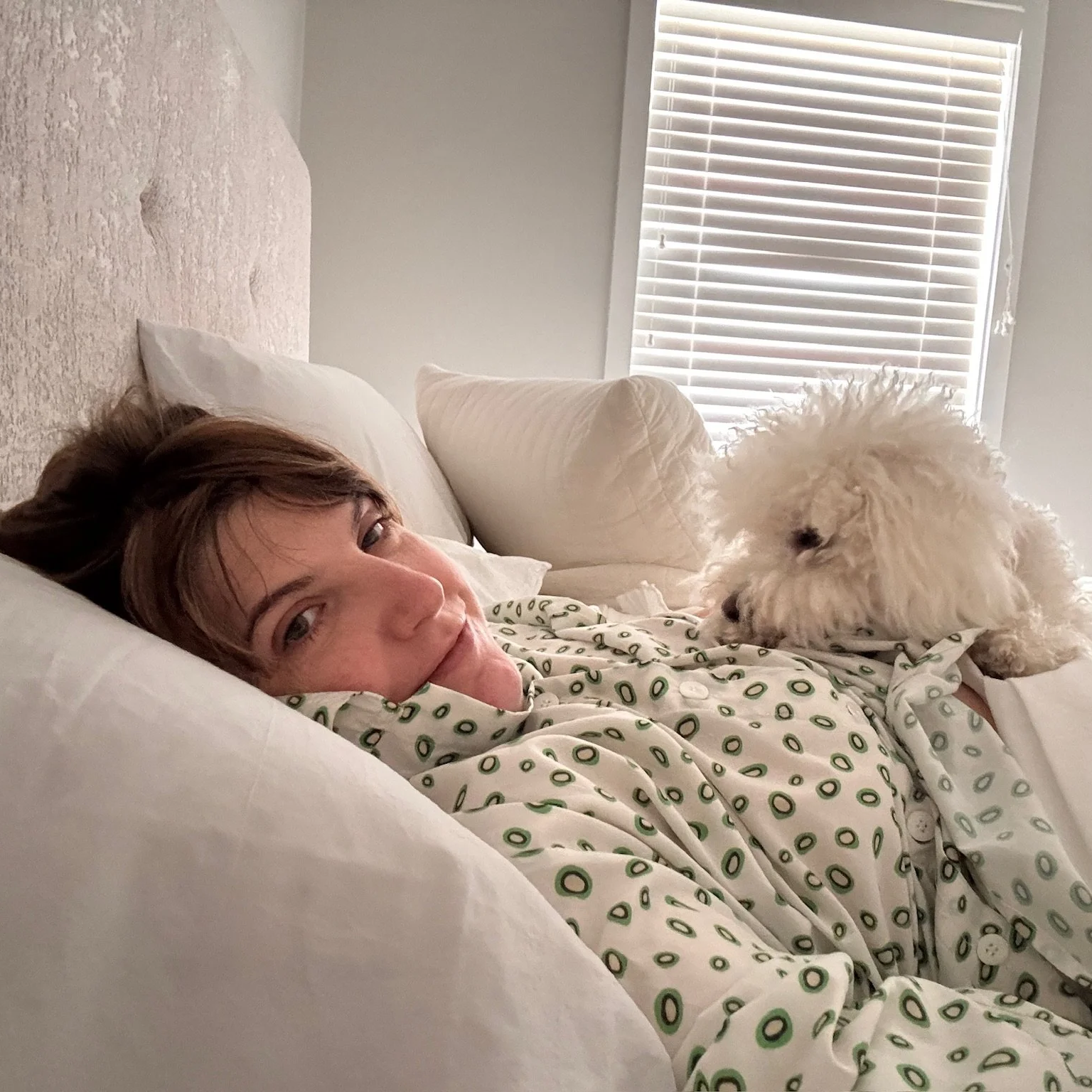

The orchids still need water. Charlie still wants that ball thrown one more time. That healthy dinner full of protein and veggies doesn’t make itself.
SEE ALSO: Bangkok: Temples, Night Markets, and Sunset Cocktails