
It's Not Just You: How Darker Days Change Your Sleep, Appetite, and Fitness

Sleeping longer, moving less, craving carbs? Feeling a little blue? Before you blame your busy schedule or your willpower, look at something easy to overlook: the disappearing daylight.
The clocks haven't even changed yet, and already you can feel it. The drive home is dimmer, it's dark when the alarm goes off, and by 4 PM all you want is to curl up by the fire with a good book.
There's a reason for that.
What Happens When the Light Changes
Daylight saving time ends November 1. Turning back the clocks doesn't shorten our days. It moves an hour of daylight from the evening to the morning, so the sun sets an hour earlier by the clock. Add the naturally shorter days of Fall, and our evenings get dark fast.
Mornings are getting darker too. Sunrise comes later as Fall goes on, so if you're up, dressed, and out the door before the sun, you may be missing the light your body most needs to get going.
For some of us, less daylight can bring on a sluggish, slightly down feeling. For others, stronger or longer-lasting symptoms may point to seasonal affective disorder (SAD), a form of depression tied to the seasons.
Appetite changes, too. Some research has found people eat more calories and crave more carbohydrates in the colder months.
Feeling a little blue? Think about how much natural light you've actually seen this week. Have you been waking in the dark, working indoors all day, and driving home after sunset?
In perimenopause or menopause? Sleep disruptions, temperature swings, and fluctuating hormones are common. Our bodies may already be asking, "Where's that regular cycle?!"
What You Can Do
Light is one of the strongest signals for your circadian rhythm – your internal body clock.
Morning daylight tells your brain it's time to be alert. Darkness triggers melatonin, the hormone that helps you get ready for sleep. When your light exposure shifts, your sleep, energy, and mood can shift with it.
That's part of the biology behind the cozy fall and winter feeling: sleeping a little longer, staying indoors, settling onto the couch earlier in the evening.
But you don't have to give in to the darker days, and small adjustments throughout your routines can help keep your wellness from floundering come Fall:
1. Chase the daylight. Get outside for 10 to 15 minutes ideally in the morning after sunrise. Morning light does the most for your body clock, but midday light helps with alertness too. Take your coffee outside or step away from your desk at lunch. Cloudy outdoor light still counts.
2. Brighten your surroundings. Open the blinds, work near a window, and turn the lights on when mornings are especially dark. Natural light is best, but a brighter room can still help you feel more awake.
3. Invest in your wardrobe. Get the layers, gloves, and warm socks you need for chilly walks, runs, or trips to the gym. Being dressed for the weather is often what gets you out the door.
4. Move, even briefly. Hitting the afternoon slump? Before another cup of coffee, take a brisk walk or a few minutes of movement. Bring a friend. Movement and fresh air may be all you need.
5. Plan for the comfort-food cravings. Start with a protein-rich breakfast, plan meals that fill you up, and keep something nutrient dense accessible - ALWAYS. Enjoy your fall comfort food. Just don't let being tired and hungry make your choices for you.
6. Keep sleep consistent. Maintain a wake-up and bedtime steady, especially around the clock change. Get some light as close to sunrise as possible. Dim the lights as bedtime gets approaches..
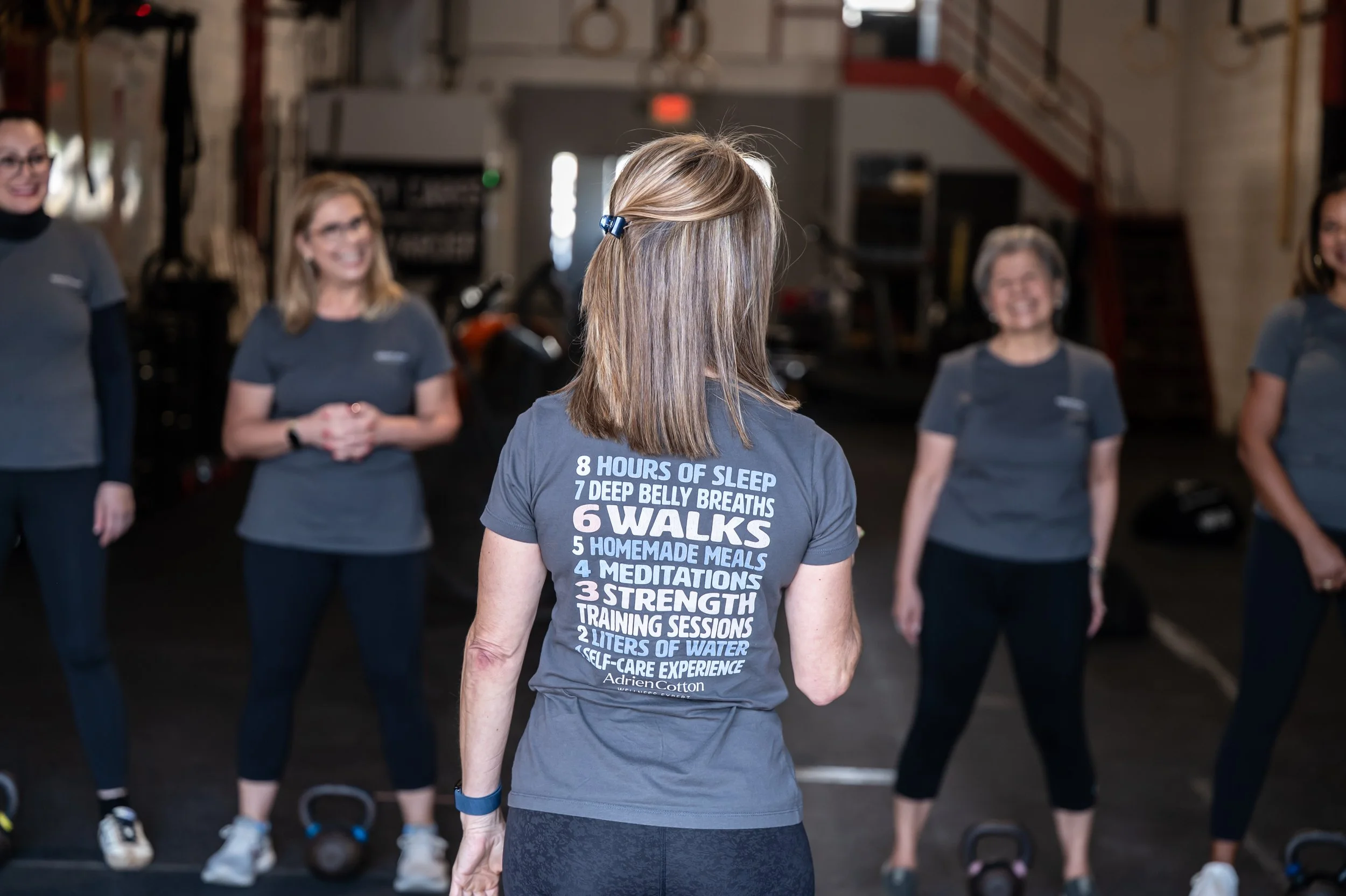
7. Don’t skimp on your strength (training). Shorter days are no reason to let your strength slide. Two or three sessions a week help you keep the muscle and bone that matter. Don't want to drive to the gym in the dark? I can teach you a 20 minute at home strength session. Get on our waitlist here: https://adriencotton.com/client-waitlist/.
Getting Through the Next Few Months
None of this is new. You've heard me talk about daylight, movement, sleep, and nutrition for years.
But knowing what to do and doing it when it's cold and dark outside are two different things. That's where three of my favorite strategies come in.
Set a goal. What do you want your health to look like this winter? Maybe it's keeping your strength, sleeping better, or sticking with your outdoor walks. Write it down. Or work with a coach who can help you build a plan. Even I have a coach…and I think you should too!
Put it on your calendar. Be specific. Not "get more sleep," but "bed by 10 PM." Not "eat better," but "cut carrots and apples Tuesday at 7 AM." Not "exercise more," but "walk at lunch Monday, Wednesday, and Friday."
Find an accountability partner. Mine is Denise. We meet at the same time, on the same morning, at the same street corner every week. No figuring out when we'll go, no waiting until we feel like it. We have a plan, and we show up, even when it's under 20 degrees!
Who's your Denise?
Your health shouldn't depend on the weather, the season, or how motivated you feel today. If darker, colder days feel like one more thing on an already full plate, especially if you're in perimenopause or menopause, there are ways to make it easier.
You don’t have to figure this out alone. The goal isn't to fight the dark, but to build a rhythm - and the support - that can help you maintain your health in any season.
That's what I built into MASTER Menopause NOW!, my signature program that relaunched in September.
We dig into the science of sleep, stress, movement, energy, and the hormonal changes that affect them. Then we turn it into strategies you can use in your everyday life.
Interested in training with me in person? My in-person program is currently full, but you can add yourself to the client wait list and I’ll contact you when there are openings!